Dlorto Now
Jun 10, 2017 by admin in HOME
Latest Rides, Videos and News
This section will feature all the rides, vents and links to media with press releases about Dlorto.
Jun 10, 2017 by admin in HOME
This section will feature all the rides, vents and links to media with press releases about Dlorto.
Jul 24, 2016 by admin in HOME
El paso Las Damas se encuentra a 3.000 metros de altura sobre el nivel del mar, sobre los 34° 50 de latitud sur, a la misma altura que las ciudades de San Rafael (Argentina) y San Fernando (Chile).
La habilitación de este paso fue posible porque este año se logró construir el tramo de 20 km que faltaba, desde el centro turístico Termas del Flaco, en el lado chileno, hasta el límite internacional.
Una parte de este camino (8 km) fue realizada en la empresa Hidroeléctrica local, para realizar sus obras de infraestructura técnica sobre el ríó Tinquiririca; este tramo incluye un puente sobre el río y un túnel en roca de 114 metros de longitud.
Dec 02, 2015 by admin in HOME
With friends having a great time enjoying the sport and speed.
Go to http://www.farausa.com for details!
May 23, 2015 by admin in HOME
Dlorto in The 24 Hours of Le Mans
Is the world’s oldest active sports car race in endurance racing, held annually since 1923 near the town of Le Mans, France. It is one of the most prestigious automobile races in the world and is often called the “Grand Prix of Endurance and Efficiency”.
Dlorto this year will be present blogging on location and preparing the material to be featured.
Event History
May 26th & 27th, 1923 saw the first running of the Le Mans 24 hours, on the public roads around Le Mans town. The original idea was for a three year event, with the winner being the car that could go the furthest distance over three consecutive races. This plan was abandoned in 1928 and the Le Mans 24 hours winners were declared for each year depending on who covered the furthest distance in the 24 hours. The early races were dominated by British, French, and Italian drivers, teams, and cars, with Bentley, Alfa Romeo and Bugatti being the prominent marques.
By the late 1930’s innovations in car design began appearing at the Le Mans 24 hours circuit, with Bugatti and Alfa Romeo running aerodynamic bodywork, enabling them to reach faster speeds down the Mulsanne straight. In 1936 the race had to be cancelled due to strikes in France. With the outbreak of World War II in late 1939, the Le Mans 24hrs race went on a ten year break.
Porsche documentary of it’s road to Le Mans 2015.
LeMans 2019
LeMans Original Trailer
Jul 17, 2011 by admin in HOME

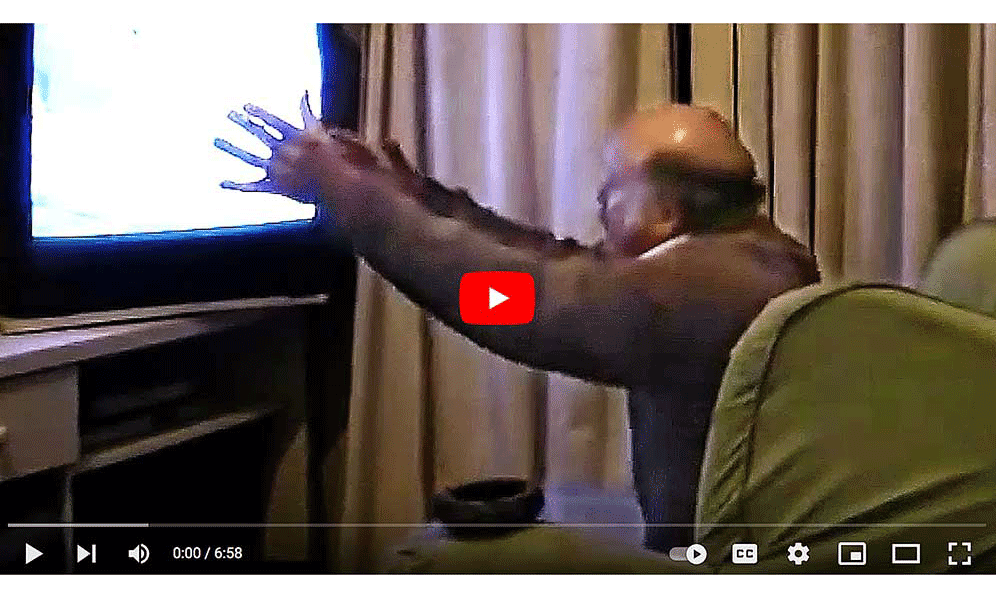
A fanatic enthusiast who became recognized in the country for this video, when his team “River Plate” came down from A to B leagues… very funny!
Futbol Big League (A) – Your team is playing against the best teams in the country.
(B) – Is the next level below in points, status and overall performance, means your team is not good enough to maintain position in (A)… in this video, we’ll see how some of us take “El Futbol” in our lives.
The team in question is River Plate, one of the best in the country; going down to the (B) for the first time in history… Our Movie Star is “Tano Pasman”; not knowing he was recorded; having a difficult time…
Así Somos – “This is the way we are…” watching this video will help better understand when it comes to the sport in Argentina.
May 07, 2011 by admin in HOME
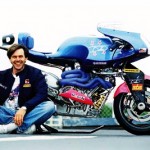
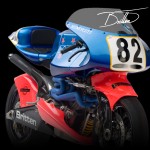
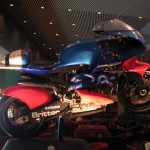
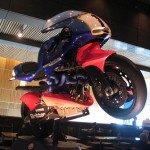
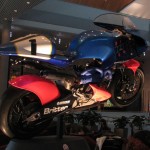
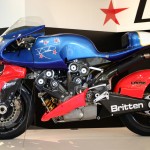
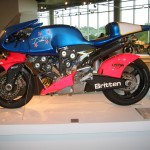
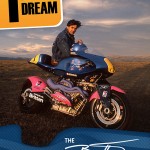
In this post you’ll read, see and maybe learn about John Britten, a visionary, a genius, a motivational legend of the late 20th century whose distinctive home-built bright pink and blue Britten motorcycle achieved iconic status world-wide.
 This is his amazing true story. From the backyard workshop to the screaming action of Daytona and the Isle of Mann, this fascinating video captures all the drama – the dreams and the nightmares, the triumphs and the tragedies. It is the legend of the man from “Down Under ” who dared to challenge the might and wisdom of the world’s great motorcycle production factories and captured a nations imagination en route.
And it is the tale of the revolutionary bike that confounded the critics and took the world by storm.
 John Britten was born in Christchurch to parents Bruce and Margaret (Ruvae) Britten on 1 August 1950. He has a twin sister Margueritte and an older sister Dorenda.
As a child John Britten built go-karts out of old packing cases and at the age of twelve had saved enough money to buy a petrol motor and build his first motor powered go-kart. When John was thirteen he and a mate, Bruce Garrick restored an old Indian Scout motorcycle which they had found in a ditch.
After leaving St Andrews College in 1968, John completed a four year mechanical engineering course at night school. He started his career as a cadet draughtsman at ICI. The ICI group at this time were owned by Crown Crystal Glass. This opened a wide range of work experience to John including mould design, pattern design, metal spinning and other mechanical engineering designs.
After leaving ICI John travelled to the United Kingdom. While there he worked for four months under Sir Alexander Gibbs and partners on a highway design linking the M1 to the M4 (these are major arterial highways in Britain).


After travelling Europe he returned to New Zealand and took a sole charge position as design engineer for Rowe Engineering, designing off-road equipment and heavy machinery.
Two years later in 1976, John built some glass kilns and went into business on his own account as a fine artist designing and making hand made glass lighting.
For several years he enjoyed working in the capacity of a small business employing three staff. During this period John converted the Mona Vale stables into an elegant home. He was not satisfied with any of the light fittings or door handles available to him in the shops so he created them all himself.
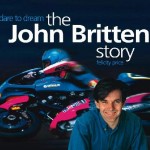
 Read: Dare To Dream – The John Britten Story
At the age of 32 John married Kirsteen Price, sold his glass business, joined the family property management and development company, Brittco Management Ltd and took on a property development project that he had conceptualised. This project was a prestigious twelve storey apartment building overlooking Hagley Park called “Heatherlea” which was completed in 1990 and was a financial success.
At this stage John had already been working on a motorcycle design for approximately two years and continued developing new methods using composite materials and performance engine designs. In 1992 he set up the Britten Motorcycle Company which initially operated from his garage/workshop at his home and was later relocated to its present premises at 31 Carlyle Street. They continued to develop the bike, despite some heartbreaking failures on the race circuit caused by faulty componetry, and finally achieved the result that in 1994 came into the public eye with a television documentary called “Backyard Visionary”.
 Visit: Britten Motorcycle Co.
At the stage of his life when he was furthering his property development business and was building up the size and strength of the Britten Motorcycle Company, whose bikes were finally winning races on the international circuits and breaking speed records on the national front, John passed away at the age of 45 after a short illness as a result of a malignant melanoma on 5th September 1995. He is survived by is wife Kirsteen and three children, Sam, Isabelle and Jessica.
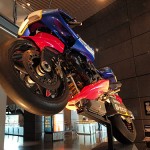
What started out as a man with a dream and few dedicated mates is now a Christchurch situated motorcycle company who have produced ten bikes so far: three are currently in New Zealand, one is in Italy, one in Holland and five in the United States of America.
Of the New Zealand bikes one is the Cardinal Britten which is used for static displays and promotional purposes. This is owned by Britten Motorcycle Company and Cardinal Network who each have it for six months of the year. The second is owned by Te Papa – The museum of New Zealand and was raced to victory in the NZ Grand Prix before it was rebuilt for the museum display. The third is the factory owned bike which won the World BEARS series (British, European, American Racing Series) in 1995. This bike is owned by Kevin Grant of Water Dynamics in Auckland and is on loan to Britten Motorcycle Company for a five year term as part of the sale agreement.
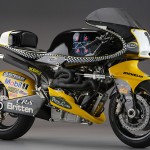
The Italian bike which is owned by Roberto Crepaldi of Cafe Racers & Superbikes also has an impressive race history and has just been restored at the factory prior to its return to Italy where it will be placed in retirement. This Britten V1000 is painted black and yellow which are CR&S’s racing colours.
In America two of the bikes, owned by Mark Stewart and George Barber are now static displays but both have been raced. The Brittens owned by James Hunter and Michael Canepa are both still racers. The bike owned by Jim Hunter is currently travelling in a show called ÒThe Art of the MotorcycleÓ which has been in the Guggenheim Museum in New York, the Field Museum in Chicago and is planned to move to the Guggenheim in Bilbo, Spain. The last of the Brittens – the #10 bike is owned by Michael Iannuccilli in Las Vegas. It has not yet been ridden apart from the standard factory test.
The ninth bike is owned by South African Gary Turner who is based in Holland. After winning the Sound of Thunder in Daytona this year the Pro Britten Race Team plan to race this bike in the 1999 European Sound of Thunder Series. This bike is painted in their team colours of siver and gold with black trim.
In 1986 John Britten decided to redesign his bevel drive Ducati race bike by creating all his own body work, but the motor and chassis proved hopelessly unreliable. John then turned to a New Zealand made Denco motor in a home built frame. This motor also proved to be a weak link. So after much fiddling and rebuilding he decided to wipe the slate clean and start again creating a new race bike, motor and all.
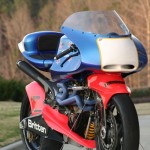
John pictured his finished result first with a hot glue gun and a roll of number eight wire. All the body work was to be made out of carbon fibre. This string-like substance is lightweight but very strong. It is used in the making of yachts, ski-boots etc. The carbon fibre used was in two kinds, plain – used mainly on flat surfaces and twill which is more flexible used on corners etc.The woven carbon fibre is wetted out with resin and is then moulded and heat cured.
The motor was to be made by casting steel. John did all his own drawings, made his own patterns and designed his own engine. He designed two engines of differing cc ratings because some race events allow a higher cc rating – the Britten V1000 and the Britten V1100 racer versions in 4 and 5 valves per cylinder, with power varying between 155 and 170 bhp. The 1100cc engine is in the Cardinal bike.
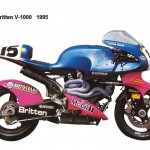
The Brittens have had a very good race history. Back in 1991 they came 2nd and 3rd in the Battle of the Twins in Daytona USA. This version of the Britten had a full fairing and was quite different to the Brittens as we know them today. The Daytona version was painted blue and red with the stars from the NZ flag painted on the side. One of these two bikes has recently been restored at the factory as a precursor to the existing Britten. To this day the Britten has been placed in nearly every event that it has raced in.
The Britten has been so successful because what started out as a hobby in a garage at home, became a world class motorcycle recognised for its brilliance in engineering all over the world. Unlike established companies who invest huge amounts of money in the development work and are obligated to show a result for that money, John Britten perservered on a trial and error basis until he was successful.
Media coverage has helped to attract sponsors for racing by bringing the bike to the public eye. This has also attracted people to purchase Britten merchandise which supports the race programme, from all over the world.
The innovative use of carbon fibre gave the bike extra speed on the race track as it was so much lighter than conventional materials. The aerodynamics of the design also have given the bike extra speed. For his work on the bike John Britten was made an Honorary Fellow of the NZ Engineers Institute and posthumously they awarded him an Entrepenurial Engineer Award.
Since John’s death the Britten Motorcycle Factory has scaled down the operation but continued to complete the 10 bikes that John had intended to build. To ensure the company’s future the company have been actively seeking a joint venture partner to invest in a future project.
Mar 14, 2010 by admin in HOME Tags:2010, Ducati, Misano World Circuit, red, red planet, WDW, WDW2010

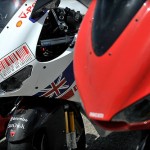
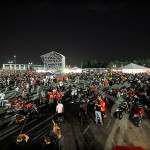
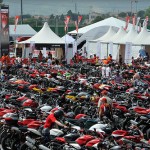
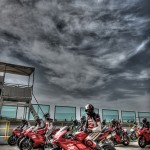
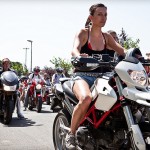
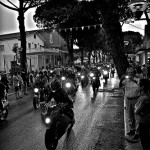
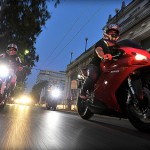
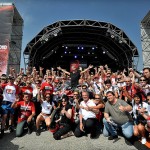
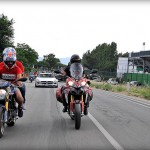
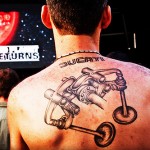
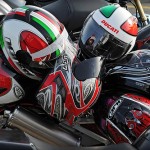
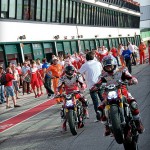
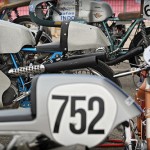
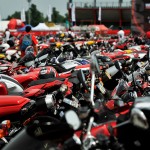
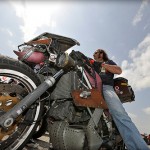
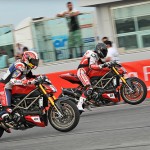
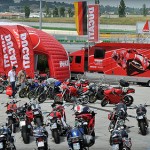
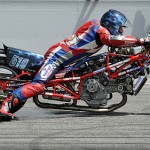
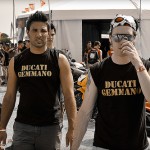
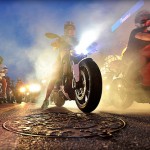
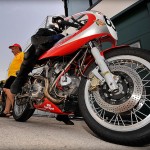
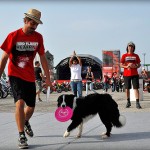
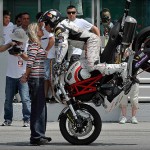
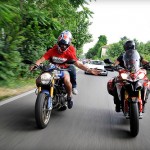
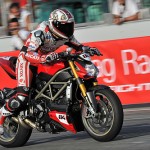
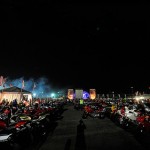
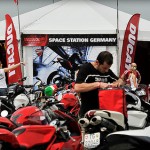
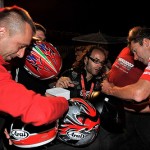
The sixth edition of World Ducati Week, the massive event that unites and excites the Ducati community, has finished after four incredible days with a record-breaking attendance of 60,000 motorcyclists. Held at the Misano World Circuit on the Adriatic Riviera, the celebration – entitled the ‘Red Planet Returns’ – ran in soaring temperatures from Thursday, 10th to Sunday, 13th June to become one of the best ever in the event’s history. While Italian Ducatisti made up 60% of the total attendance at WDW2010, the remaining passionate Ducati fans travelled from 28 nations and five continents to underline the huge international appeal of the Ducati brand. Owners from Europe, USA, Australia, Russia and India, united with those from Brazil, China, Malaysia and even Gabon and Nepal to celebrate their shared passion and loyalty to the Ducati brand.
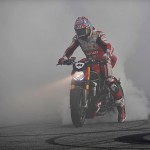
Start your engines for the 2010 World Ducati Week, the important Ducati bike meet that sees motorcyclists and fans of all ages flock to Italy from all over the world. The Italian Misano World Circuit will once again host proceedings, and during the four-day period Ducati will offer a rich program of fun-filled, action-packed bike-themed events. Shows; track tests; special appearances by riders and stuntmen; bike tours; visits to the Ducati museum and factory, the heart of passion; historic bike exhibitions; conferences and, above all, the congregation of the world’s Ducatisti, the undisputed stars of the show.





















Feb 27, 2010 by admin in HOME Tags:Extreme Looping, SLS AMG

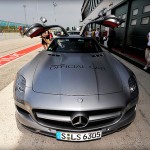
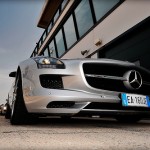
The Mercedes-Benz SLS AMG embodies a blend of consummate automotive fascination and high tech. The super sports car delivers a compelling mix of purist styling, consistent lightweight design and superior driving dynamics. At the same time, the Mercedes-Benz SLS AMG fully lives up to all the expectations of hallmark Mercedes everyday practicality and optimum safety.  In essence, the new ‘Gullwing’ offers the ideal synthesis of the strengths of Mercedes-Benz and AMG.
The new super sports car from Mercedes-Benz and AMG makes for an alluring proposition with its unrivalled technology package: aluminium spaceframe body with gullwing doors, AMG 6.3-litre V8 front-mid engine developing 420 kW/ 571 hp peak output, 650 Nm of torque and dry sump lubrication, seven-speed dual-clutch transmission in a transaxle configuration, sports suspension with aluminium double wishbones and a kerb weight of 1620 kilograms based on the DINstandard – this superlative combination guarantees driving dynamics of the highest order. The ideal front/rear weight distribution of 47 to 53 percent and the vehicle’s low centre of gravity are testimony to the uncompromising sports car concept. The ‘Gullwing’ accelerates from 0 to 100 km/h in 3.8 seconds, before going on to a top speed of 317 km/h (electronically limited). The fuel consumption of 13.2 litres per 100 kilometres (combined) puts it at the front of the competitive field (all figures provisional).
 “Mercedes-Benz is presenting an exhilarating super sports car in the guise of the Mercedes-Benz SLS AMG,
  which is bound to set the pulses of all car enthusiasts racing that extra bit faster.
The brands Mercedes-Benz and AMG have joined forces to create the Mercedes-Benz SLS AMG – which is set to become one of the most alluring sports cars of all time”, says Dr. Dieter Zetsche, Chairman of the Board of Management of Daimler AG and Head of Mercedes-Benz Cars.
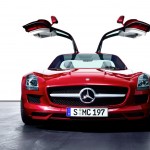


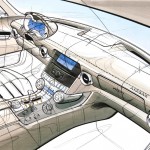
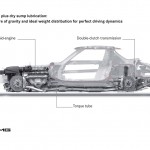
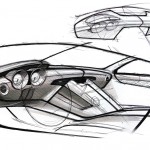
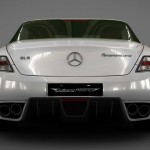
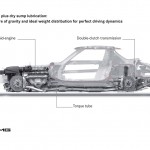
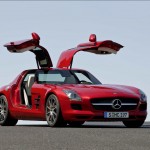


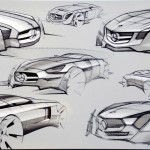
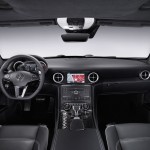

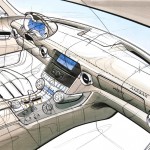
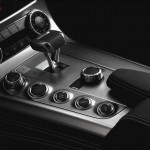


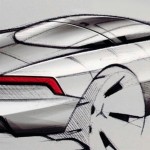
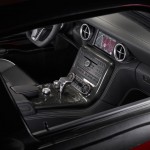
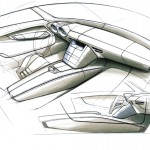
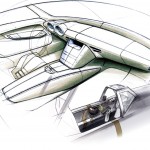
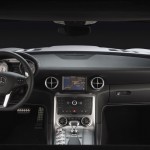
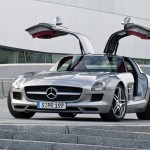
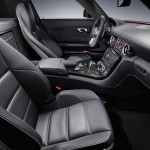
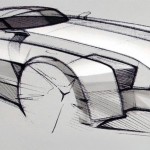
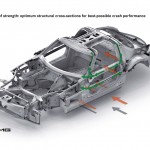
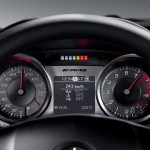

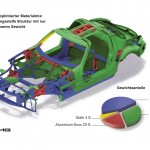
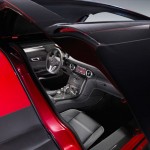
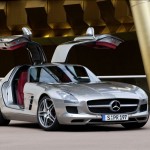
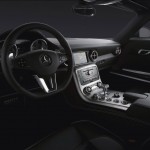
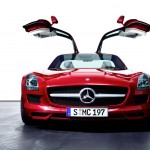
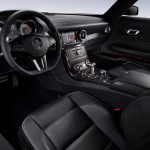
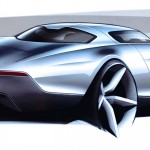
Mercedes-Benz SLS AMG ChassisThe SLS AMG is the first car developed in-house by the Mercedes-Benz performance brand. The ideal front/rear weight distribution of 48 / 52 percent and the vehicle’s low centre of gravity
For the first time, Mercedes-Benz and AMG are presenting a car with an aluminium chassis and body.
Compared with the traditional steel design, this results in a significant weight saving, clearly illustrated in the projected kerb weight of 1,620 kilograms.
The newly developed bodyshell comprises an aluminium spaceframe. Despite the low sitting position in typical sports car fashion, the wide-opening gullwing doors make it easy to get in and out of the vehicle.
The fine-tuned AMG 6.3-litre V8 engine achieves a peak output of 420 kW/571 hp at 6800 rpm, thus turning the SLS AMG into one of the most powerful sports cars in its segment.
Mercedes-Benz SLS AMG Space FrameA power-to-weight ratio of 2.84 kg/hp comes courtesy of the low vehicle weight. The eight-cylinder naturally-aspirated engine delivers maximum torque of 650 Nm at 4750 rpm.
The ‘Gullwing’ accelerates from 0 to 100 km/h in 3.8 seconds, before going on to a top speed of 315 km/h (all figures are provisional).
The V8 high-revving engine has been reengineered: the principal measures in increasing output include the all-new intake system, the reworked valve train and camshafts, the use of flow-optimised tubular steel headers and the dethrottling of the exhaust system.
This results in much better cylinder charging, which feeds through into an increase in output to 420 kW/ 571 hp with maximum torque of 650 Nm.
Mercedes-Benz SLS AMG Space FrameThe use of high-strength components compensates for the increased engine load associated with the higher output.
Forged pistons, a reinforced crankshaft bearing, optimised crankcase structure, along with improved lubrication thanks to an ondemand high-performance oil pump ensure optimum durability.
Despite these higher loads, the engine weight for the M159 has been further reduced. The forged pistons as oscillating masses play a particularly valuable role in this respect.
Thanks to targeted weight optimisation, the weight of the engine has been reduced further, resulting in a kerb weight of 206 kilograms and a power-to-weight ratio of 0.36 kg/hp.
The AMG 6.3-litre V8 engine is coupled with an ultra-light carbon-fibre driveshaft at the rear axle – similar to the set-up used on the DTM CClass racing touring car.
Mercedes-Benz SLS AMG PrototypeThe transmission is mounted at the rear (transaxle principle) and is connected to the engine housing via a torque tube.
The advantages of this sophisticated solution are associated with the rigid link between the engine and transmission and, in turn, the optimum support for the forces and torque generated.
A new AMG dual-clutch transmission with seven gears boasts fast gear changes and offers the driver a choice of four different driving modes, ranging from comfortable to extremely sporty, as well as a RACE START function.
A mechanical differential lock is integrated in the compact transmission casing.
The chosen solution with a front-mid engine plus transaxle configuration ensures an ideal front/rear weight distribution of 48 to 52 percent.
Mercedes-Benz SLS AMG PrototypeThe suspension system adopts double wishbones and hub carriers made of lightweight forged aluminium.
Electronic controls include 3-stage ESP as standard, providing the driver with access to the three “ESP ON”, “ESP SPORT” and “ESP OFF” modes at the push of a button.
The braking system features ceramic composite brakes, while the wheels are 9.5 x 19 inch (front) and 11.0 x 20 inch (rear) in size and are based on the innovative flow-forming principle reduce the unsprung masses while increasing driving dynamics and suspension comfort.
They are combined with 265/35 R 19 (front) and 295/30 R 20 (rear) tyres developed exclusively for the SLS AMG.
Feb 23, 2010 by admin in HOME Tags:2002 Mercedes Benz CLK, CLK Dlorto, CLK GTR Roadster

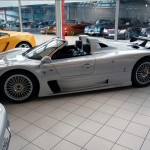
After producing only 20 of the 25 CLK GTR Coupes, HWA decided to build the remaining five as roadsters. Unlike the Coupe, they have a rear wing supported by normal stanchions and built up headrests with intake scoops. Each was specially built for an individual customer and had a huge list of standard options including air conditioning and a luggage set.
The company behind the GTR Roadster is HWA GmbH and they have a long history developing Mercedes-Benz race cars. Since 1967, HWA have been producing cars such as the CLK DTM touring cars and other one-of creations. Naturally, HWA also worked with AMG on many of these projects.
Back in 1999, DaimlerChrysler acquired AMG, renaming it to Mercedes AMG GmbH. In doing so they effectively separated HWA from AMG developments. This left the 170-employee firm with independence over its products and let the company produce the stunning CLK GTR Roadster.
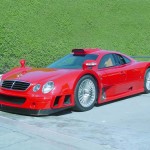
In November of 1998 the very first road-going CLK GTR was completed to homologate the GT1 racecar. GTRs competed in every round of the 1997 FIA GT Championship against the Porsche GT1 and McLaren F1. Drivers Bernd Schneider and Klaus Ludwig took many victories and helped the factory team win the FIA’s championship in 1997 and 1998. Riding on this success, HWA decided to sell a road-going variant and limited production to 25 examples.
While the front end of the GTR had a resemblance to the front-engined CLK saloon it was named after, the GTR was entirely new. The road cars (Straßenversion) mimicked the racecars almost entirely from the outside, but featured more forgiving suspension, a lush interior and an integrated wing.
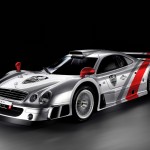
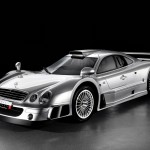
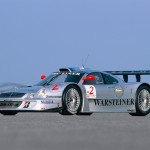
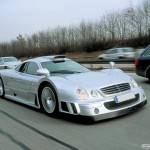
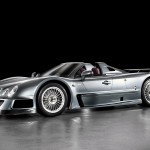
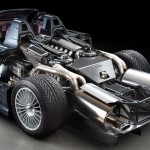
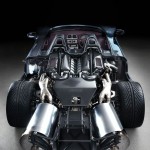
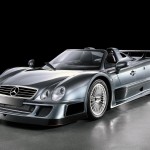
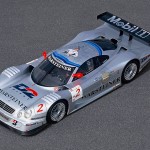
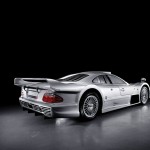
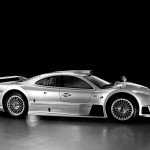
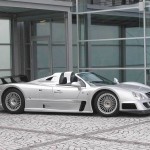
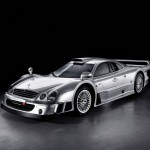
The technology used to beat the competition on the track is bred into the CLK GTR. The basis of the car is a race-proven, carbon fiber and aluminum honeycomb monocoque. Protection for the occupants is provided by an integrated steel roll cage with rigid crash-impact boxes. The suspension is all inboard, like the race car and the ride-height is adjustable. The entire body is made from carbon fiber.
Powering the GTR was the M120 V12 based off the SL600. It displaced 6.9 liters and produced around 600bhp. Mated to the monocoque tub and sequential gearbox, the engine was a stressed member of the chassis. A six-speed sequential-manual transmission is fitted to the power plant with gear change by buttons on the steering wheel. Some customers had their car ordered or upgraded with the 7.3 liter engine.
Inside the car was very well appointed with a bespoke instrument cluster, a leather clad steering wheel with integrated airbag, air conditioning, an audio system, adjustable pedals, four point seat belts and luggage pods with set of seven suitcases.
Limited Edition No. 1-First CLK GTR Roadster produced and used to promote the next four. Completed in 2003 with chassis number WDB2973971Y000037. Painted silver with dark blue leather interior. Offered by Classic Car Collection in Switzerland for many years at $1,200,000USD or €850,000.
Limited Edition No. 2-Completed in Silver with purple upholstery chassis WDB2973971Y000032. Only example ordered in right hand drive. Original price tag was €1,300,000. Sold at RM Auctions’ 2009 Automobiles of London sale for £616,000 ($1,000,000 USD)
Limited Edition No. 5-Bought by Mark Johnston to promote his Calabasas Mercedes-Benz dealership. During a customer test drive the engine oil light came on and the transmission only lasted 10 blocks. Threatened to sue Mercedes-Benz and HWA for the price of the car.